Real job example
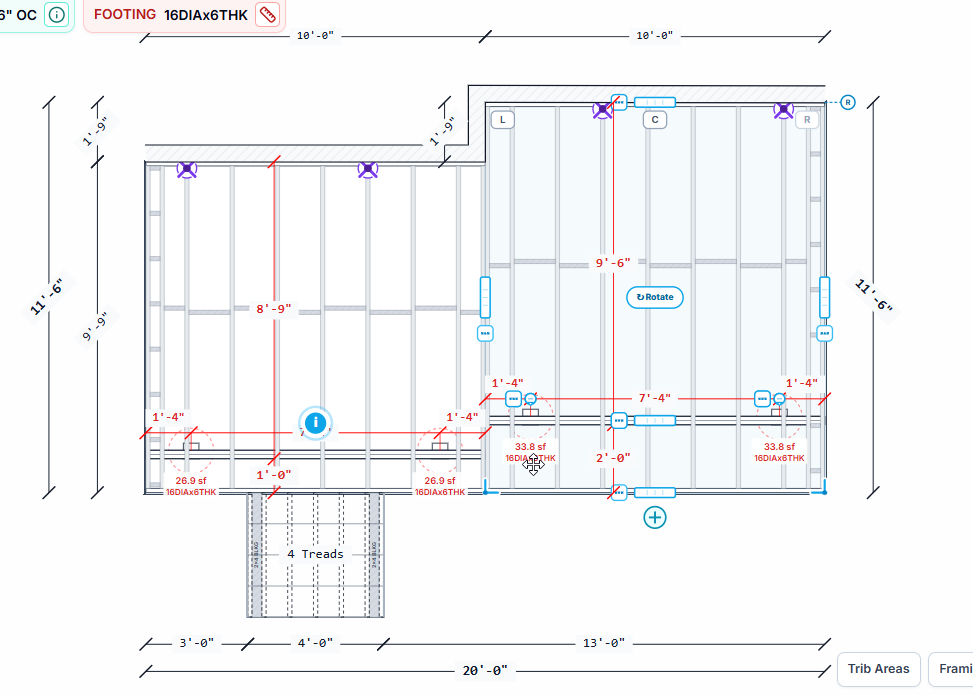
L-shaped deck with connected sections
Build a connected L-shaped layout, keep the house relationship clear, and place stairs on the correct leg.
What you will accomplish
- Connect two sections without overlaps
- Keep framing and house-wall orientation correct
- Review the combined front rim, ledger, rail, and takeoff runs
Job snapshot
- Main section
- 20' wide
- Right leg
- 10' wide × 14' deep
- Attachment
- Connected house-facing sections
- Access
- Front stair on main section
Treat the L as two buildable deck sections
Start with the main rectangular deck, then add the projecting leg as a second section. Each section retains its own geometry and structural configuration while DeckDraft coordinates aligned edges and connected output.
Use Wall bumpout only for a house-wall jog such as a chimney or bay window. Use another deck section when the deck footprint itself grows.
Connect and align the new section
- 1Add the second sectionChoose Bay, then size the new section before fine placement.
- 2Drag it into the intended cornerNearby edges and corners snap as they align. Confirm there is no unintended overlap.
- 3Confirm framing directionSelect the new section and verify its ledger side, joist direction, beam layout, and deck height.
- 4Lock the settled geometryLock sections once their size and relationship are correct so later canvas work does not move them accidentally.
Place access and guards after the footprint is stable
Add stairs only after both deck sections are correctly connected. Drag the stair to the intended exposed edge and confirm that short rail runs, shared corners, and openings resolve as expected.
Review the 3D presentation for customer understanding, then return to plan and elevation views for construction review.
Review the combined runs
- Ledger and rim stock may combine across aligned sections.
- Beam and post layouts remain section-specific unless intentionally aligned.
- Decking borders and seam boards must be reviewed at the inside corner.
- Takeoff notes explain stock cuts and supported splice assumptions.
Still unclear?
Ask Docs AI about this page, or open DeckDraft when you need AI Help to read the active job.